Why a 600 km EV Claim Does Not Promise a 600 km Road Trip
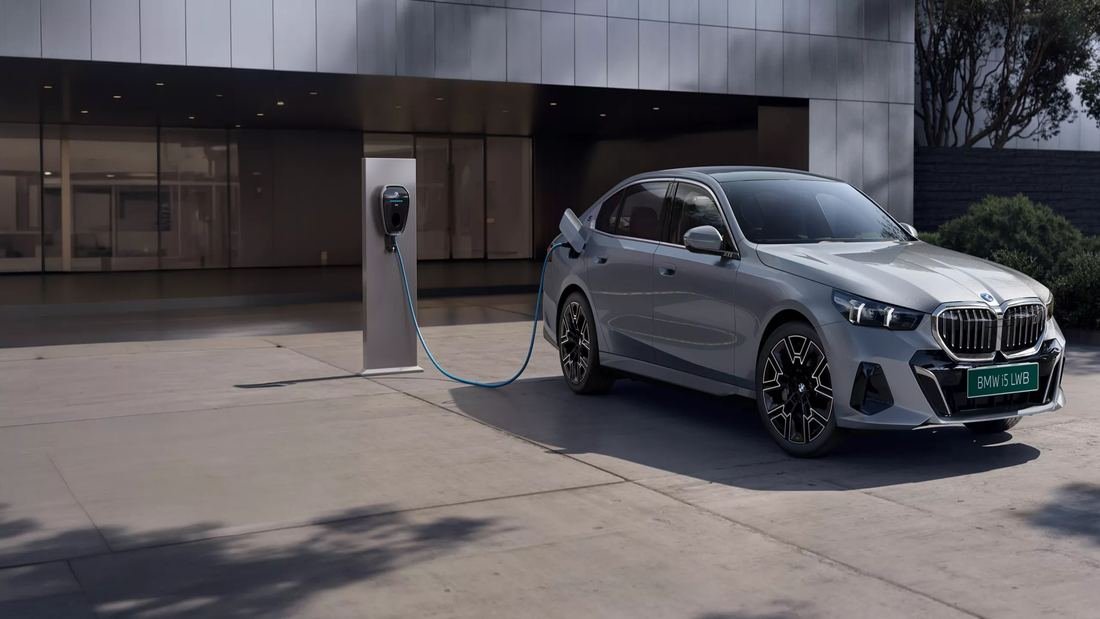
Image: existing FlamingPiston artwork. Numerical examples below are hypothetical, not BMW test results.
A car advertises 600 km of range. Your planned journey is 430 km. Does that mean you can comfortably skip a charging stop? Not from those two numbers alone. You still need to know the test cycle, the usable battery energy, your consumption and the charge level you want left on arrival.
Read the Small Label Beside the Big Number
WLTP, EPA and an Indian certification figure are not interchangeable units. Keep the test procedure attached to every range claim, then use route-specific consumption and a reserve to plan the journey.
Certified Range Is a Reference, Not Your Itinerary
The US fuel-economy label explains electric range as the distance expected on a full charge under its test basis, while also presenting electricity consumption. [1] Another certification system can use a different procedure. Comparing two range figures without their test labels can make a methodological difference look like a vehicle advantage.
For a shortlist, try to compare the same cycle and equivalent variants. Note wheel size and specification where the manufacturer distinguishes them. If only different-cycle figures are available, show them separately rather than applying a made-up universal conversion percentage.
The Useful Formula Is Energy Divided by Consumption
Suppose an EV has 60 kWh of usable battery energy and consumes 15 kWh per 100 km on your route. The arithmetic gives 400 km from the full usable energy: 60 ÷ 15 × 100. This is a hypothetical example, not the specification of the pictured car.
Now plan a motorway leg from 80% charge down to a 15% arrival reserve. You are using 65% of the usable battery, or 39 kWh. If consumption rises to 20 kWh/100 km, the planned leg becomes about 195 km. The car has not mysteriously lost half its battery; you changed both the energy window and the consumption assumption.
| Hypothetical scenario | Available energy | Consumption | Calculated distance |
|---|---|---|---|
| Full usable battery | 60 kWh | 15 kWh/100 km | 400 km |
| 80% to 15% charge window | 39 kWh | 15 kWh/100 km | 260 km |
| Same window, higher consumption | 39 kWh | 20 kWh/100 km | 195 km |
Why Consumption Changes
Tesla’s owner guidance identifies speed, weather, elevation, climate control, load and tyre condition among the factors affecting energy use. Its navigation guidance also describes route-energy predictions as estimates that respond to driving and environmental conditions. [2] [3]
That makes a previous city commute an imperfect predictor for a loaded highway holiday. Start with relevant evidence, watch the car’s arrival estimate during the journey and keep a backup charger in mind. A precise-looking percentage remains an estimate.
Do Not Confuse Battery Energy with Electricity Bought
The dashboard’s driving consumption and the electricity billed at a charger do not necessarily measure the same boundary. The EPA label’s electricity-consumption measure includes charging losses. [1] If you are calculating cost from a meter or bill, use the energy actually purchased rather than assuming every billed unit became usable driving energy.
Likewise, a headline peak charging rate does not by itself tell you the duration of a whole stop. Check the manufacturer’s stated charging window and conditions, then allow for charger access and a backup plan. For everyday ownership, dependable charging where you park can matter more than winning a range-table comparison.
FlamingPiston’s Take
Use certified range to begin a comparison and consumption to plan a trip. There is no honest single percentage by which every EV falls short of its brochure. The sensible question is whether the car can cover your regular route with a comfortable reserve and a workable charging routine.
For a very different kind of electric-car claim, our Roadster reveal report separates Tesla’s demonstration figures from independent testing and delivery plans.
FAQs
Can I directly compare WLTP and EPA range?
Treat them as different test bases. Prefer the same cycle for a like-for-like comparison and do not use a universal conversion percentage.
How do I estimate an EV charging leg?
Divide the usable energy available within your planned charge window by route consumption, then retain an appropriate arrival reserve.
Are the 60 kWh examples measured results?
No. They are hypothetical arithmetic examples, not test results for any named vehicle.
Sources and Method
Checked on 16 October 2026. This is sourced editorial analysis, not a FlamingPiston road test. Manufacturer claims and illustrative calculations are identified in the text.